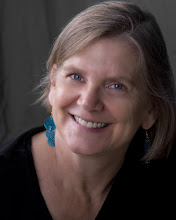
"Wah, wah, wah I don't want to edit my writing. Wah, wah, wah, I want someone else to do it and make it all pretty. Wah, wah, wah writing is poopy. Wahhhhhhhhhhhhhhhhhhhhhhhhhhhhhhhhhhhhh.
Thanks for this indulgence.
Judi (wah)"
Judi just sent me the above in an email.
Here's what I have to say. Let me edit any time. Having assembled words to work with is so much less traumatizing than staring at a BLANK PAGE. FOTP I call it--Fear of the Page.
My husband says there are two kinds of writers: those who fear getting started and those who fear getting finished. Once something is declared finished then it's ready for public scrutiny, a scary prospect. But not, to me, as scary as the BLANK PAGE.
Some people can't let go; they never stop reworking. Raymond Carver edited and edited--with some help from his friends--certain of his already published stories, "A Small Good Thing," for one. It was Degas, or maybe Matisse, who continued to touch up his paintings, even after they were hanging on the walls of museums.
Not me. Once it's in print, I'm done. Onward! To another blank page. Gulp.
Wednesday, March 22, 2006


Wednesday, March 01, 2006
THE instant, not AN instant
The newspaper article I referred to in my last post was titled:
"Life changes in an instant." But to be precise, in "The Year of Magical Thinking,"
Didion's memoir about her husband's death and her exploration of
grief, she writes:
"Life changes in the instant."
What a difference: the use of "the" over "in."
Didion read last night and took questions. Talking about her early
writing days Didion said the editor at Vogue would get furious when
she came in every day with her eight lines of type and there were
"extra words."
Didion's writing is spare, fine-tuned, original. You won't find the cliche, the tired phrase, anything extra. Every sentence receives the same scrutiny. It was a pleasure to hear her read her own rhythmic prose, the refrains suggesting lament.
I wish I had asked her if she produces sloppy first drafts or if it
comes out of her head clean. Damn. My first drafts are blubbering
messes of words.
How about yours?
One more thing: She said she would write pages by day and sit and read them at night and cry.
"Life changes in an instant." But to be precise, in "The Year of Magical Thinking,"
Didion's memoir about her husband's death and her exploration of
grief, she writes:
"Life changes in the instant."
What a difference: the use of "the" over "in."
Didion read last night and took questions. Talking about her early
writing days Didion said the editor at Vogue would get furious when
she came in every day with her eight lines of type and there were
"extra words."
Didion's writing is spare, fine-tuned, original. You won't find the cliche, the tired phrase, anything extra. Every sentence receives the same scrutiny. It was a pleasure to hear her read her own rhythmic prose, the refrains suggesting lament.
I wish I had asked her if she produces sloppy first drafts or if it
comes out of her head clean. Damn. My first drafts are blubbering
messes of words.
How about yours?
One more thing: She said she would write pages by day and sit and read them at night and cry.
Monday, February 27, 2006
"Life changes in an instant"
"Life changes in an instant," is the second line of Joan Didion's memoir, The Year of Magical Thinking, and the title of an article in my local paper, announcing that Didion is speaking on our campus Tuesday night. The Writing From Personal Experience workshop that normally meets at my house on Tuesdays will get together and go to the talk instead.
I gave this assignment/suggestion: use as a prompt anything that strikes you about the evening--our carpooling, walking to campus from town, the conversation you overhear waiting in line, Joan Didion's body language, the hat the person seated in front of you is wearing, etc.
What a relief: the workshop isn't school, where the assignment might be to go hear a lecture and write critically about what the speaker discusses. Sure, there's a place for that, but we're not covering the Didion event for the newspaper. We can write about what moves us, what we notice, a gesture that triggers memory. And anyway, I'm always attracted to journalism that include a careful intrusion of first-person experience.
The next time you're at an event, try this: write about what ignites your imagination. Watch yourself meander on the page. Have fun. Remember: writing isn't (anymore) homework.
I gave this assignment/suggestion: use as a prompt anything that strikes you about the evening--our carpooling, walking to campus from town, the conversation you overhear waiting in line, Joan Didion's body language, the hat the person seated in front of you is wearing, etc.
What a relief: the workshop isn't school, where the assignment might be to go hear a lecture and write critically about what the speaker discusses. Sure, there's a place for that, but we're not covering the Didion event for the newspaper. We can write about what moves us, what we notice, a gesture that triggers memory. And anyway, I'm always attracted to journalism that include a careful intrusion of first-person experience.
The next time you're at an event, try this: write about what ignites your imagination. Watch yourself meander on the page. Have fun. Remember: writing isn't (anymore) homework.
Tuesday, February 21, 2006
Stick to the Writing
When people write about intensely personal matters, it's tempting sometimes to stray into the psychology surrounding the situation. Let's say the writing's about the demise of a marriage, the demands of an elderly parent, alcoholism, or the loss of a life dream. A listener may feel triggered or may want to offer advice, support, a similar story from his/her life. But the focus always, in a writing group, must stay on the writing itself--the story, the words the writer has committed to paper. What works? What's memorable? What could use tweaking?
Some workshops treat everything written as fiction and refer to the writer as the narrator--it's not YOUR grandmother, it's THE grandomther.
Since I teach writing from personal experience I don't set up my workshops that way. But we all need to remember that this is not group therapy; it's a writing group.
Some workshops treat everything written as fiction and refer to the writer as the narrator--it's not YOUR grandmother, it's THE grandomther.
Since I teach writing from personal experience I don't set up my workshops that way. But we all need to remember that this is not group therapy; it's a writing group.
Thursday, February 16, 2006
Voicing the Voice
One of my students has been grappling with her writerly voice. She doesn't hear a voice in her head when she writes. What is voice?, she asked in class. We discussed this--some people actually hear a voice in their heads. Some writers have distinct voices, like Hemingway--always--and Kaye Gibbons in Ellen Foster. Voice can be elusive, hard to pinpoint, similar to tone. The best advice I can offer for finding your voice is to write, a lot. Free write for ten minutes a day and just let the words flow. Try not to censor or audition words as you go along. I invite you to respond to this blog with a freewrite. Let the first words that come to mind come out. Ready Set. Go!
Tuesday, January 24, 2006
Sharing Journal Entries
In journal workshops some people enjoy sharing their entries and read often. Others never do. Either way is OK. Usually once somebody reads something--and we all get to enjoy the meander from the writer's particular perch--others want to read too.
Sometimes it's like watching a scene in a new movie or looking at a bizarre landscape. I particularly enjoy hearing folks read about everyday objects. (I give prompts about them.) What people read can change the way I look at amd feel about stuff: my kitchen sink, a watch, backyards. My world view stretches and I like that. Poetry does this too.
Here's an example.
I abhor coupons and am always annoyed when the person in front of me in line uses them--especially when the check-out clerk has to call a manager because something is WRONG with the coupon--as if being a coupon isn't wrong enough! Having read the following poem earlier this week (check the archive) in poetry daily I have a new relationship to coupons. Phew.
Coupons
The cashier leans forward
to examine the expiration date.
Here's my mother's squinting face
in silent concentration and memory,
adding up my father's paychecks,
subtracting the bills,
scissors and newspaper close by,
my mother's thrifty face
as hard and bright as Formica.
Tim Skeen
The Southern Review
Volume 41, Number 4
Autumn 2005
Sometimes it's like watching a scene in a new movie or looking at a bizarre landscape. I particularly enjoy hearing folks read about everyday objects. (I give prompts about them.) What people read can change the way I look at amd feel about stuff: my kitchen sink, a watch, backyards. My world view stretches and I like that. Poetry does this too.
Here's an example.
I abhor coupons and am always annoyed when the person in front of me in line uses them--especially when the check-out clerk has to call a manager because something is WRONG with the coupon--as if being a coupon isn't wrong enough! Having read the following poem earlier this week (check the archive) in poetry daily I have a new relationship to coupons. Phew.
Coupons
The cashier leans forward
to examine the expiration date.
Here's my mother's squinting face
in silent concentration and memory,
adding up my father's paychecks,
subtracting the bills,
scissors and newspaper close by,
my mother's thrifty face
as hard and bright as Formica.
Tim Skeen
The Southern Review
Volume 41, Number 4
Autumn 2005
Thursday, January 12, 2006
Eavesdropping's Joys
Sitting in restaurants, waiting on line, passing people on a walk, I often find myself nosing in on other people's business. I can't help it. Sometimes, when we're out to dinner, my husband will say, "OK, what are those people behind us talking about?" I can be talking to him but I'm also listening to other tables--and he can tell.
The other day I was having coffee with a few friends. I became aware of the woman sitting at the next table. She was with a man. They weren't talking but they weren't uncomfortable. I glanced over again. She was drawing--I could see it was an interior. It was her view of the restaurant, from where she was sitting.
She put her drawing away and started to get up. I told her I couldn't help but notice her drawing. She showed it to us, told us what she was doing--interiors this month--and gave me her blog. She posts her drawings almost every day.
I want to borrow some of her ideas, like focusing on different subjects for a month at a time. OK writers. Let's spend the rest of the month writing about interiors.
The other day I was having coffee with a few friends. I became aware of the woman sitting at the next table. She was with a man. They weren't talking but they weren't uncomfortable. I glanced over again. She was drawing--I could see it was an interior. It was her view of the restaurant, from where she was sitting.
She put her drawing away and started to get up. I told her I couldn't help but notice her drawing. She showed it to us, told us what she was doing--interiors this month--and gave me her blog. She posts her drawings almost every day.
I want to borrow some of her ideas, like focusing on different subjects for a month at a time. OK writers. Let's spend the rest of the month writing about interiors.
Thursday, January 05, 2006
Jane Kenyon Poem about Writer's Block
Not Writing
A wasp rises to its papery
nest under the eaves
where it daubs
at the gray shape,
but seems unable
to enter its own house.
Jane Kenyon
This poem speaks to me right now as I look around my desk area. I see stacks of manila files in need of file drawers, piles of papers in need of sorting--and filing, bills that need paying, notes to self that need attention, car rental agreements for upcoming trips, forms to fill out. I move one pile, add to another. I am convinced I will be unable to write until I tidy up, unable to enter my house of writing.
A wasp rises to its papery
nest under the eaves
where it daubs
at the gray shape,
but seems unable
to enter its own house.
Jane Kenyon
This poem speaks to me right now as I look around my desk area. I see stacks of manila files in need of file drawers, piles of papers in need of sorting--and filing, bills that need paying, notes to self that need attention, car rental agreements for upcoming trips, forms to fill out. I move one pile, add to another. I am convinced I will be unable to write until I tidy up, unable to enter my house of writing.
Monday, December 12, 2005
Start Short
In response to BB's post about how to get motivated to write down the ideas and thoughts that she/he has every day but never gets around to putting on the page.
MAKE THE ACT OF WRITING REAL EASY.
Keep open spiral bound notebooks around the house or in your office--wherever you tend to hang out. (My husband and I share one that lives on the kitchen counter.) Always have pens around. Take 3 x 5 cards out and about with you.
When you have a thought, a story, a memory, or you hear something on the radio you might want to write about--or at least remember--jot down a few relevant words in the book or on the card, even if it's only a word or two.
F. Scott Fitzgerald's "The Crack Up" is an alphebetical list of short entries about all sorts of subjects. Here's the beginning of an entry:
Notes on Childhood:
Make a noise like a hoop and roll away.
She's neat ha ha.
Grandfather's whiskers.
Aha, she laughed.
Annex rough house.
Hume against Locke.
Changing Voice.
Snow.
Hot dogs. . . .
Other entries are longer, written anecdotes, overheard conversations.
So now, forget about Fitzgerald and practice putting your pen to paper.
Ths is how writing gets started. You put words on the page or on the screen.
MAKE THE ACT OF WRITING REAL EASY.
Keep open spiral bound notebooks around the house or in your office--wherever you tend to hang out. (My husband and I share one that lives on the kitchen counter.) Always have pens around. Take 3 x 5 cards out and about with you.
When you have a thought, a story, a memory, or you hear something on the radio you might want to write about--or at least remember--jot down a few relevant words in the book or on the card, even if it's only a word or two.
F. Scott Fitzgerald's "The Crack Up" is an alphebetical list of short entries about all sorts of subjects. Here's the beginning of an entry:
Notes on Childhood:
Make a noise like a hoop and roll away.
She's neat ha ha.
Grandfather's whiskers.
Aha, she laughed.
Annex rough house.
Hume against Locke.
Changing Voice.
Snow.
Hot dogs. . . .
Other entries are longer, written anecdotes, overheard conversations.
So now, forget about Fitzgerald and practice putting your pen to paper.
Ths is how writing gets started. You put words on the page or on the screen.
Can't Take That Away From Me
A woman in a local prison had to drop out of the inmate's writing group because she got "written up," meaning she did something wrong. Because of her transgression, we wouldn't be seeing her in the writer's group for several months. I imagine she was denied other freedoms too--like outdoor exercise and smoking rights. But they didn't make her hand over her journal.
In a card, she told me she'd be out of the group for several months but that it was OK. "They can take me out of the Writer's Group," she wrote, "but they can't take writing out of me!"
In a card, she told me she'd be out of the group for several months but that it was OK. "They can take me out of the Writer's Group," she wrote, "but they can't take writing out of me!"
Thursday, December 08, 2005
A Moment's List
Last night I taught a writing workshop for breast cancer survivors at Rex Hospital in Raleigh, North Carolina. One of their favorite exercises was to write a gratitude list. Do it every day, I told them. List 5 things you're grateful for. Research has shown that people who do this are happier. Listing even the tiniest things can help us be in the moment, pay attention, appreciate being alive. My list for right now:
I'm grateful for my comfy pen, a Piot G-2 07.
I'm grateful for the bird I hear tweeting outside my window.
I'm grateful there's a heater blowing on my chilly feet.
I'm grateful for today's breeze.
I'm grateful for my cup of coffee; a friend calls coffee "the black hope."
Try this exercise any time--when you're getting impatient waiting in line, for example. You'll probably be waiting in lots of lines this month. Pull out your journal, a scrap of paper. Write on the Banana Republic bag you're lugging around, carrying the shoes you volunteered to return for you daughter. Grrrrr.
Look around you, listen, touch something. And make your list. Let me know what you come up with.
I'm grateful for my comfy pen, a Piot G-2 07.
I'm grateful for the bird I hear tweeting outside my window.
I'm grateful there's a heater blowing on my chilly feet.
I'm grateful for today's breeze.
I'm grateful for my cup of coffee; a friend calls coffee "the black hope."
Try this exercise any time--when you're getting impatient waiting in line, for example. You'll probably be waiting in lots of lines this month. Pull out your journal, a scrap of paper. Write on the Banana Republic bag you're lugging around, carrying the shoes you volunteered to return for you daughter. Grrrrr.
Look around you, listen, touch something. And make your list. Let me know what you come up with.
Sunday, December 04, 2005
Sweating it out on the Page
People spend hours a weeks working out--lifting weights, taking shape and sculpt or Pilates classes, working up a sweat on tread mills, playing tennis, taking brisk walks, doing yoga, swimming laps.
But we devote so little time to toning our minds. The brain needs to work out too. In a journal we can track thoughts, ponder on the page, explore our feelings, get in touch with our motives, listen to our inner voices, capture a slice of life, recreate a conversation, vent, quiet the raging voices, track dreams--reflect.
Exercise increases endorphin output and makes us feel better. So does writing. I wish I could start a writing room at my gym.
But we devote so little time to toning our minds. The brain needs to work out too. In a journal we can track thoughts, ponder on the page, explore our feelings, get in touch with our motives, listen to our inner voices, capture a slice of life, recreate a conversation, vent, quiet the raging voices, track dreams--reflect.
Exercise increases endorphin output and makes us feel better. So does writing. I wish I could start a writing room at my gym.
Monday, October 24, 2005
Getting Started
I've had this blog for a couple of months now but, aside from a New Yorker cartoon, I haven't posted anything--as you can see. I've thought of lots of post ideas, have even composed sentences, entire entries, in my head. But I haven't until this minute actually sat down to do it.
I didn't know how to post and had to learn from my husband. That was one stumbling block. I was convinced that learning how would take a lot of time--and I have no patience for computer learning. That was another stumbling block. The time just never seemed "right." That was another stumbling block.
For the umpteenth time, my husband said to me, "Just let me show you how. It will take two minutes. I promise."
"But I have a client later this morning and I have a class to prepare."
"Two minutes," he said.
"But, but . . ."
I sounded just like my students who say: "I don't have time to write." or "I don't MAKE time to write." or "What I have to say isn't important so I don't say anything." or "I just can't. Not now. It's not the right time. Later." or "I really really want to write about my mother but I don't know where to begin."
And how do I respond to these folks? "Just do it," I say. "Put pen to paper, fingers to keys. Writing doesn't happen without writing. Writing is thinking. Meaning grows on the page."
Sometimes we teach what we need to learn.
So, voila! An entry! Yes, I know, blog freaks will say, "Well duh, blogging is already ancient history. Where have you been?"
But something else I tell my students is this: you have to start from where you are. Comparisons are odious. Let those voices yammer in your head at you--scold you, censor you, laugh at you. A woman in a class last week said she hears this, her mother's voice, in her head, all the time. "Who do you think you are, young lady?"
But start anyway. Talk back. Give 'em hell.
So, hello. I've started!
I didn't know how to post and had to learn from my husband. That was one stumbling block. I was convinced that learning how would take a lot of time--and I have no patience for computer learning. That was another stumbling block. The time just never seemed "right." That was another stumbling block.
For the umpteenth time, my husband said to me, "Just let me show you how. It will take two minutes. I promise."
"But I have a client later this morning and I have a class to prepare."
"Two minutes," he said.
"But, but . . ."
I sounded just like my students who say: "I don't have time to write." or "I don't MAKE time to write." or "What I have to say isn't important so I don't say anything." or "I just can't. Not now. It's not the right time. Later." or "I really really want to write about my mother but I don't know where to begin."
And how do I respond to these folks? "Just do it," I say. "Put pen to paper, fingers to keys. Writing doesn't happen without writing. Writing is thinking. Meaning grows on the page."
Sometimes we teach what we need to learn.
So, voila! An entry! Yes, I know, blog freaks will say, "Well duh, blogging is already ancient history. Where have you been?"
But something else I tell my students is this: you have to start from where you are. Comparisons are odious. Let those voices yammer in your head at you--scold you, censor you, laugh at you. A woman in a class last week said she hears this, her mother's voice, in her head, all the time. "Who do you think you are, young lady?"
But start anyway. Talk back. Give 'em hell.
So, hello. I've started!
Sunday, September 18, 2005

Wednesday, June 22, 2005
Subscribe to:
Posts (Atom)